










By Paul Biba
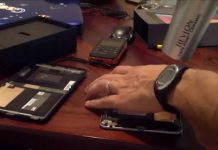
I just spent about 45 minutes with Phil Lubell, Vice President of Digital Reading, to get a hands-on with the new ereaders.
All three readers are touch enabled and Phil started out by saying that, much to Sony’s surprise, the $100 premium old Sony Touch had a larger demand than the cheaper Pocket Edition. Surveys they have done have shown that 78% of readers want touch and 81% of reading is done in homes.
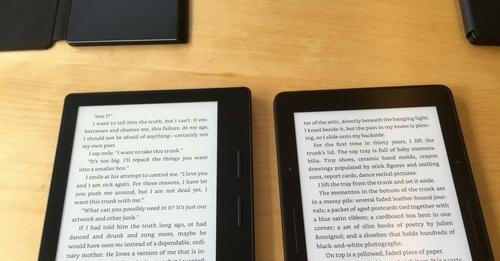
The new readers use the Pearl screen, just like the Kindle, and it is remarkable that Sony’s new touch interface does not seem to interfere with the screen’s sharpness or contrast at all. I couldn’t tell the difference between their touch screen and my Kindle 3.
Page turns are definitely faster than my Kindle 3 and the units have buttons to turn pages, as well as using a swipe on the screen. They will come with 12 dictionaries in various languages, including one American English and 1 British English dictionary. In a very neat feature, the units will keep a log of all words that have been looked up. The Pocket Edition is 41% lighter than the Kindle and 51% lighter than the Nook. All units will allow for customizable screen savers, allow books to be stored in collections (folders) and can be engraved.
One option that is unique, as far as I know, is that you can adjust the contrast and brightness of the screen, and the unit has various settings for screen detail, among other things. These adjustments could be very important in viewing PDFs. The units also have “Intelligent PDF Zoom” which divided the PDF into 4 quadrants.
By Paul Biba
The Kindle Review has gotten ahold of a Kindle 3 and like the other posts below likes it very much. Here’s a snippet from the end of the review. Go over there for more detail.
Kindle 3 Review – Very Strongly Recommended if it’s what you’re looking for
At $189 the Kindle 3 is very tempting. It’s also the best eReader released in the 2.5 years this blog has been around.
Your decision to get a Kindle 3 should, however, depend on what features you value the most and on whether the Kindle 3 is the eReader/device that best meets your reading needs.
Here are the main reasons to stay away – it’s not a multi-purpose device, it’s probably not going to bestow an aura of coolness on you (although it might make intelligent people view you more favorably), the $139 Kindle WiFi is even better (if you don’t need 3G), there is no support for library books, Kindle 3 doesn’t support ePub, it does nothing other than read, no SD card slot and no replaceable battery, it’s not open, there’s no color, there’s no touchscreen.
Here are the main reasons to buy it – you love to read, you like to read and can afford $189 for an eReader, you want to read more, you get tired reading from LCD screens, you want to read in sunlight, you want a device built for reading from the ground up, you want to be able to buy books anywhere, you want to be able to read books anywhere and anytime, you want lots of free public domain books, you want your books read out to you, you want access to the best ebook store, you want access to the best eReader infrastructure.
And now a personal note, to explain why I hadn’t posted anything the last few days prior to this, and some other stuff.
As I mentioned lately (and Snarkmarket noticed), this July ended a 16-month period of unemployment for me. I’m now working as a phone tech support representative for TeleTech, a multinational call center company that does customer service for a lot of major corporations. For instance, it was recently named Best Buy’s “Customer Care Vendor of the Year”.
I take technical support and troubleshooting calls from 2:30 to 11 p.m. Monday through Friday for a corporation whose name you would probably recognize—but though TeleTech’s social media policies allow me to admit I work for TeleTech (as long as I’m careful to make clear that I do not speak for TeleTech and my opinions do not represent those of TeleTech), they restrict me from saying who the client whose calls I take is.
It really irritates me, because despite this corporation’s embattled reputation, I’m really proud to be working for it (at one remove) and helping people. But the corporation apparently doesn’t want it bruited about that it outsources its phone support, out of concern it might make it look bad.
Even though I can’t say who it is, I’m not going to be covering or commenting on any stories about it or related entities (including TeleTech) here while I’m working for TeleTech, to avoid any possible conflict of interest.
I’ve been working on adjusting to the demands of suddenly having a 40-hour-a-week job (at strange hours—it’s kind of weird to know that if I wanted to take part in the local late-night scene, I could do so right after I get out of work!). As you can imagine, it does not leave as much time left over for blogging as being unemployed (though the pay is a lot better), and sometimes when I have other things to do (shopping, installing Windows 7 on my computer) my blogging time loses out. I’m going to be trying to catch up over the next few days, but this is why my posting can be a little irregular.
Anyway: on to more e-book stuff! I’ve been building up quite a backlog of starred articles in Google Reader over the last few days…
![]()
A while back I was talking to an Australian who has been in the book publishing biz since Adam was on a skateboard. We were talking about other stuff, and I was bemoaning how it was that one industry (book publishing) didn’t learn from the recent mistakes of a similar industry (music publishing). Off the record (that’s why he doesn’t get a name here) he told me:
“Truth is, I know the major publishers in this country saw the ebook writing on the wall, but they’ve done everything they can to stave off the change. They knew it would come but they figured if they could hold it off for a few extra years, they could bank these massive profits off $30 paperbacks, which would bankroll the costs involved in swapping over to ebooks.”
Just stop and have a think about that. Keep in mind that this person is a straight-shooter and had nothing to gain my making this up.I believe this – not only because I’ve watched the moves (of lack thereof) of the local book industry over the last decade, and they fit. I also believe it because the person who said this clearly believed it, and he/she should know. He/she knows Australian publishing backwards, forwards, and from multiple angles.
By Gary Price Founder and Senior Editor of Resource Shelf

In June, we concluded a survey, linked on 10 of our highest traffic websites, with more than 5,000 responses from patrons around urban and rural America. The survey included questions regarding demographics, computer/device usage, borrowing habits, general feedback on user experience, and suggestions for collection development.
[Snip]
Here Are a Few Findings:
+ 74% of users are female, between the ages of 30-59.
+ Nearly 70% have a college and/or postgraduate degree.
+ 60% learned about the download service from the library’s website (if our past blog posts and training sessions weren’t enough to get you to promote on your website, hopefully this is!)
+ 87% listen to audiobooks on an MP3 player, 44% of which are iPod users.
+ 33% of users own an eBook reader (e.g., Sony Reader, Barnes & Noble nook)
+ For those who don’t own an eBook reader, 90% stated that compatibility of eBooks from the library is an important factor.
The blog post concludes with contact info about how OverDrive customers can access additional stats from the ContentReserve.com
I’m about a week and a half behind the curve on this, but I’ve just noticed that John Scalzi and Wil Wheaton are putting on a fanfic contest. Write a 400-to-2000-word story based on a rather…remarkable painting featuring Scalzi and Wheaton by the end of the month, and you could win 10-cents-a-word payment for and publication of the story, plus a collection of books from Subterranean Press.
Winning stories will be sold in chapbook form to benefit the Lupus Alliance of America.
The entry deadline is 11:59 p.m. Eastern, June 30th 2010, with one entry allowed per person.
There’s no denying that’s a…remarkable picture. I’m not even sure where I would begin.
Just as I was about to shut down for the night, I ran across a voice-enabled iPad e-reading program called vBookz and selling for $4.99. Result? I can pick from tens of thousands of public domain classics, download the text, then have my iPad read it to me via voice synthesis. Like the Kindle 2 I once owned, in other words; super-simple to use.
Click on the image for a better view and you’ll notice that vBookZ points out the word it’s reading. Furthermore, the quality of the voice synthesis is about the same as on the Kindle—maybe even better. I hope that Joanna, the Canadian teacher who contributes regularly and insightfully to TeleReaed, will give this one a try and tell us how it works out for her students. Yes, Joanna, this one will handle French. Reads in 13 languages! Each language beyond English costs $4.99. The others are "Czech, Danish, Dutch NL, French, Greek, German, Norwegian, Polish, Portuguese, Italian, Spanish, Swedish."
When, just when, will Apple make voice synthesis as easy to enjoy with its iBooks program? And when will certain writers and publishers understand that voice synthesis will help earn them more money by allowing people to enjoy books during their commutes? Right now this is one more advantage that public domain books and enlightened small publishers and authors will enjoy over the big guys. I know first-hand. A super-busy history professor at George Washington University used my novel as required reading for his students because he could audition it while going to and from work. He heard some audio files that I passed on, but he could just as easily have been a Kindle owner.
News release about vBookz follows.
By Rich Adin
Sue Lange, today’s guest writer, is a novelist and blogger on culture and technology at the Singularity Watch. Two of her published books of science fiction satire (Tritcheon Hash [2003, Metropolis Ink] and We, Robots [2007, Aqueduct Press]) are available at Amazon. Sue also has an ebook compilation of her published short fiction available in the Kindle Store or at Book View Cafe. Sue followed my articles about the downfall of literature and what follows is her take on the subject.
_____________________
The Rarefied Literary Critic
by Sue Lange
Rarefied: lower in oxygen. Extend that idea to all gases. Extend it further to the world of literature and you get a critic who is not full of hot air. I have nothing against windbags, but when it comes to literary criticism, perhaps less is more. Less gas maybe means more substance.
By Paul Biba
New Features
Support for the Kobo Reader and the HTC Desire
PDB Input: Add support for PDB files created with incorrect encodings
EPUB Output: Make the file size splitting algorithm more intelligent. If a split results in a tree that is very small, choose another split point.
Add an entry to the Fetch News menu to fetch all scheduled news
MOBI Output: When inserting metadata, hide the searchable version of the tags (append with ttt).
They are still searchable, but not visible. (more…)
By Paul Biba
Just got a press release from Kobo saying that their ereader is available for pre-order at Borders online and will ship in June. It will run $149.99. The Reader will come pre-loaded with 100 classic books. More info here.
Our own Joanna reviewed a pre-release version of the Reader in April and she liked what she saw. You can find the review here. She also did a follow-up when the Reader hit the stores in Canada. You can find that here.
You can also read Joanna’s interview with Kobo’s CEO, Michael Serbinis here.
By Rich Adin
Smashwords and ebooksellers like Smashwords (such as Books for a Buck) are the real threat to agency pricing and the Agency 5 (Macmillan, Hachette, Simon & Schuster, Penguin, and HarperCollins). The reason is simple: the combination of quality and low price.
I find it hard to justify paying $14.99 for a fiction ebook unless I am absolutely enthralled with the author, and even then I am more inclined to pass on the ebook than spend that kind of money on a read-once-throwaway ebook. No need to repeat all the reasons; they have been bandied about the Internet and the magazines for months. And if I don’t know the author, I certainly wouldn’t pay the agency price. Amazon may have had it right when it set a top price of $9.99.
But look at Smashwords and similar sites. They sell ebooks in many categories from authors with whom I am not familiar for a reasonable price. I’m much more likely to spend $3.99 on an unknown author than $14.99. Of course, that isn’t enough to be a threat to the Agency 5. The Smashwords threat comes by Smashwords’ authors also being available in the iBookstore and Amazon, but primarily in the iBookstore.
(more…)
By Tony Bandy
Who doesn’t love a good comic book? Granted, comics these days are a far-cry from the cheap, pulpy titles such as G.I. Combat, Sgt. Rock and Richie Rich that I used to read, but in the end all comics do is entertain, no matter what style or story you like!
But flashing forward to the present day, has the thought of reading or re-reading your favorites on on your e-reader ever crossed your mind? Whether you have a smart phone, Kindle, Sony or some other reading device, the chances are good that you can once again enjoy Superman, Batman or your other favorite superhero once again!
By Paul Biba
Steve Forbes, Chairman & CEO, Forbes Media; David Granger, Editor-in-Chief, Esquire Magazine
As economy recovers will certain forms of media lead the way in growth: all past patterns thrown out the window because of changes with the web plus bad economy at the same time. Shouldn’t look to the past for comfort or discomfort the question is whether the changes made now will work. Will see advertising creating content now.
How does need for integrity mix with need to ally with advertisers: this is where brand is critical. People will rely on a brand to help them plough through all the information available. Important to use web to slice and dice to appeal to unique audiences.
Are media’s difficulties a good thing? No, but unavoidable. What the web is doing to media is just the beginning. Patterns in terms of advertising and classified changing made worse by recession. Not end of world, just means we have to figure out how to change content. One size fits all marketing no longer works. You need to devise specific solutions for each advertising client. Ge over platforms and delivery and figure out what is value added. People still want useful content. Get over idea that everything is corralled, can’t do it in age of digitization, but new models will emerge.
By Stephen Windwalker, editor of The Kindle Nation

Should we file this one under “The Count” or “The Miscount?” Only time will tell.
In a 154-word piece that runs today under her byline and the headline “So Far, E-Books Aren’t Making Sales Waves,” the New York Times’ Phyllis Korkki leads with this paragraph:
The publishing industry’s alarm over the electronic book isn’t based on current use. Last year, less than 2 percent of all books sold were e-books, according to Bowker, which tracks the industry.
Korkki goes on to compare that 2 percent figure with other figures that seem to have been spoon-fed her by Bowker:
* 35 percent of all book sales last year were hardcovers.
* Another 35 percent were trade paperbacks.
* 21 percent were mass market paperbacks.
* That 2 percent share for ebooks was matched by 2 percent audiobooks and far outstripped by 5 percent for that popular format, “other.”
By Robert Nagle
This interview was conducted via email in Summer, 2009 just after Jack Matthews’ 84th birthday. Throughout the process, Matthews had a lot of fun with it: answers were sometimes full of deliberate misspellings and archaic contractions. After I assembled his answers into a rough draft (where I replaced ampersands in his answers with the spelled out word “and”), Matthews protested; punctuation was for him a religious matter; I later learned he had once published an essay “Philosophy of the Comma” to explore (among other things) the question of whether the “frequency of semi-colons in a prose text is a clear and accurate measure of the author’s intelligence.” Sometimes I would be disconcerted by the superficiality of an answer (only to learn later that he had already written an essay about the same topic or devoted a chapter to the subject in his unpublished 1994 A WORKER’S WRITEBOOK). This is Part 1 of a 5 part interview (See Part 2, Part 3, Part 4 , Part 5). See also: Jack Matthews: An Introduction, Jack Matthews: The Art and Sport of Book Collecting), and On Choosing the Right Name for a Story Character.
How long does it take a serious writer to learn brevity? Mastery of form? The ability to produce a deep aesthetic enjoyment?
This is an interesting question — like the others, indeed, but not as answerable as they. I think one strives to generate meaning as energy; it’s like a demonstration in classical mechanics in physics: we say we are “moved” by a story, for example. So if there is a quantum of meaning expressible in 20 words and you express it in 10, you’ve doubled the power of the sentence. (This quantification is very crude, of course, and doesn’t do justice to the beautiful complexity of a good sentence).